
Dowsing in the footsteps of our Kings and Queens. Richard Sears.
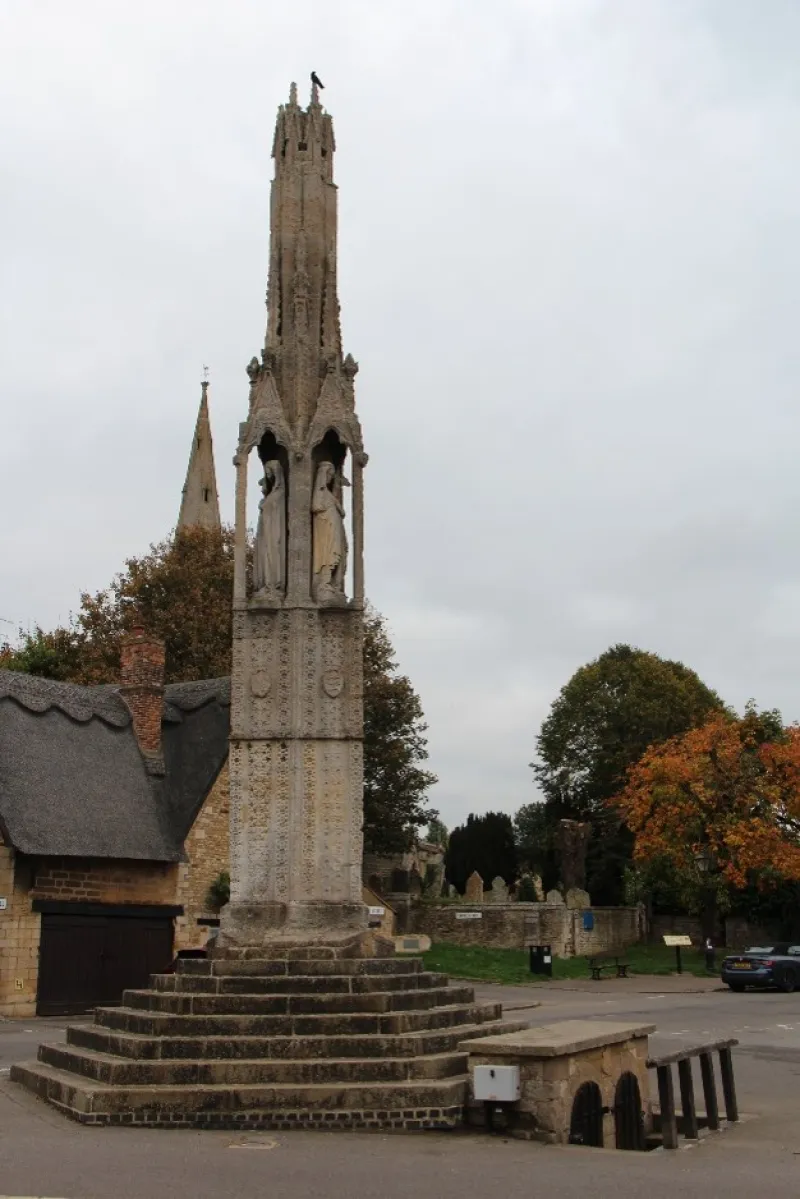
1. The Eleanor Cross at Geddington. Note the well doors on the right.
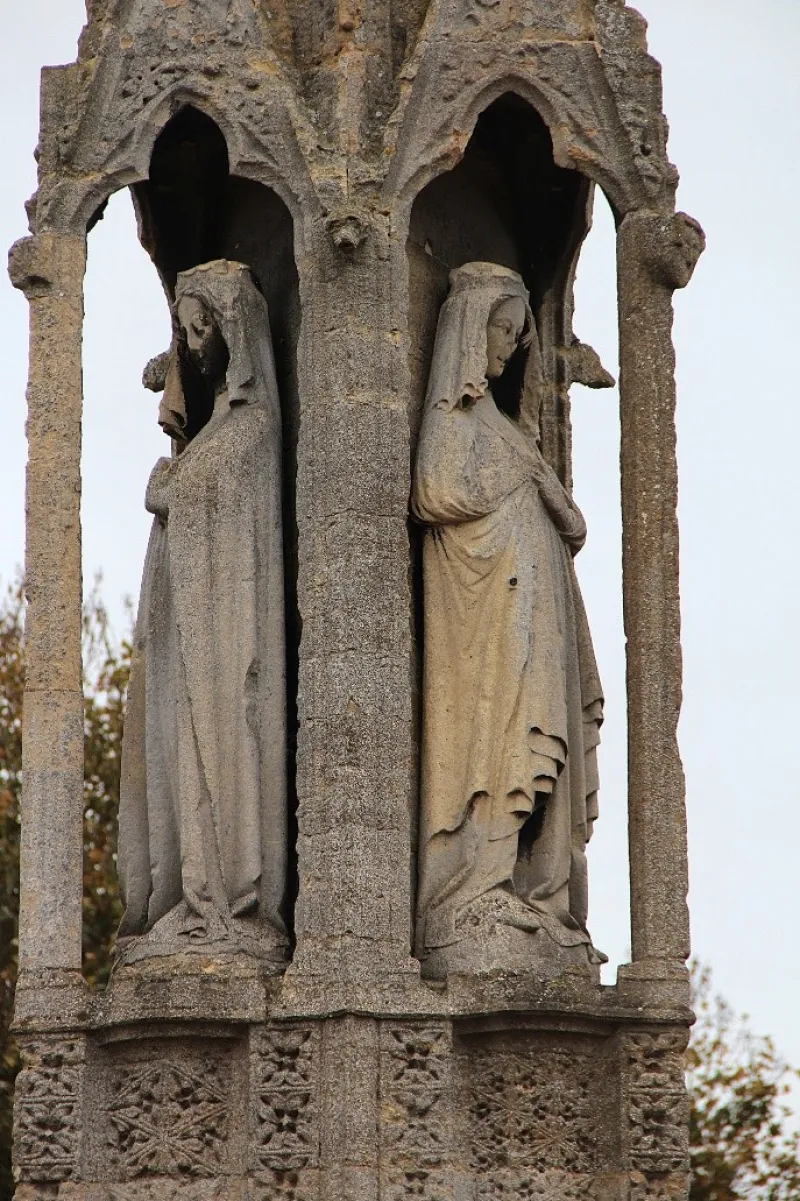
2. Probably the best preserved Eleanor Cross.
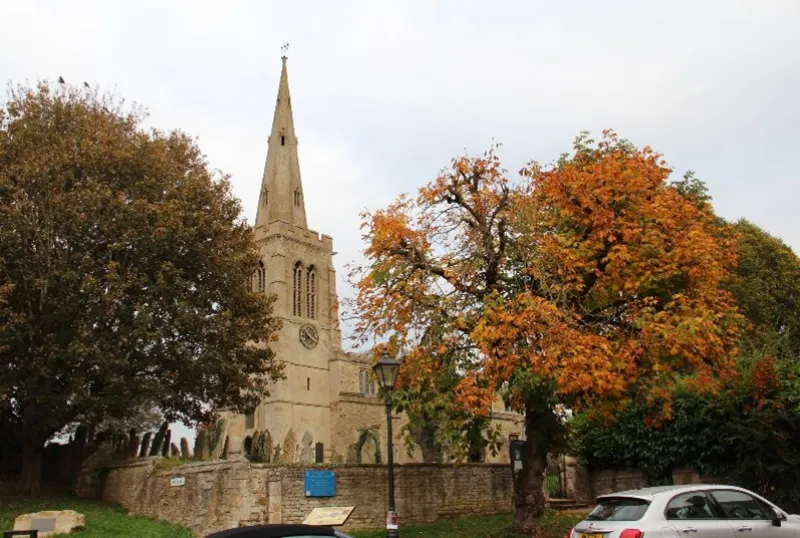
3. St Mary Magdelene church on a Saxon site. Geddington
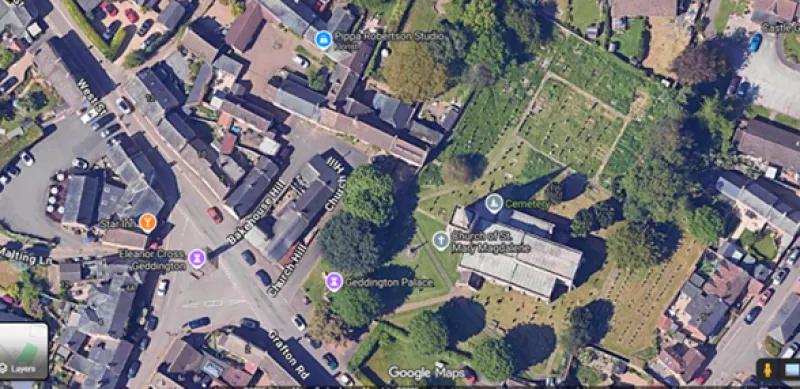
4. St Mary Magdelene church. I map-dowsed the Google plan.
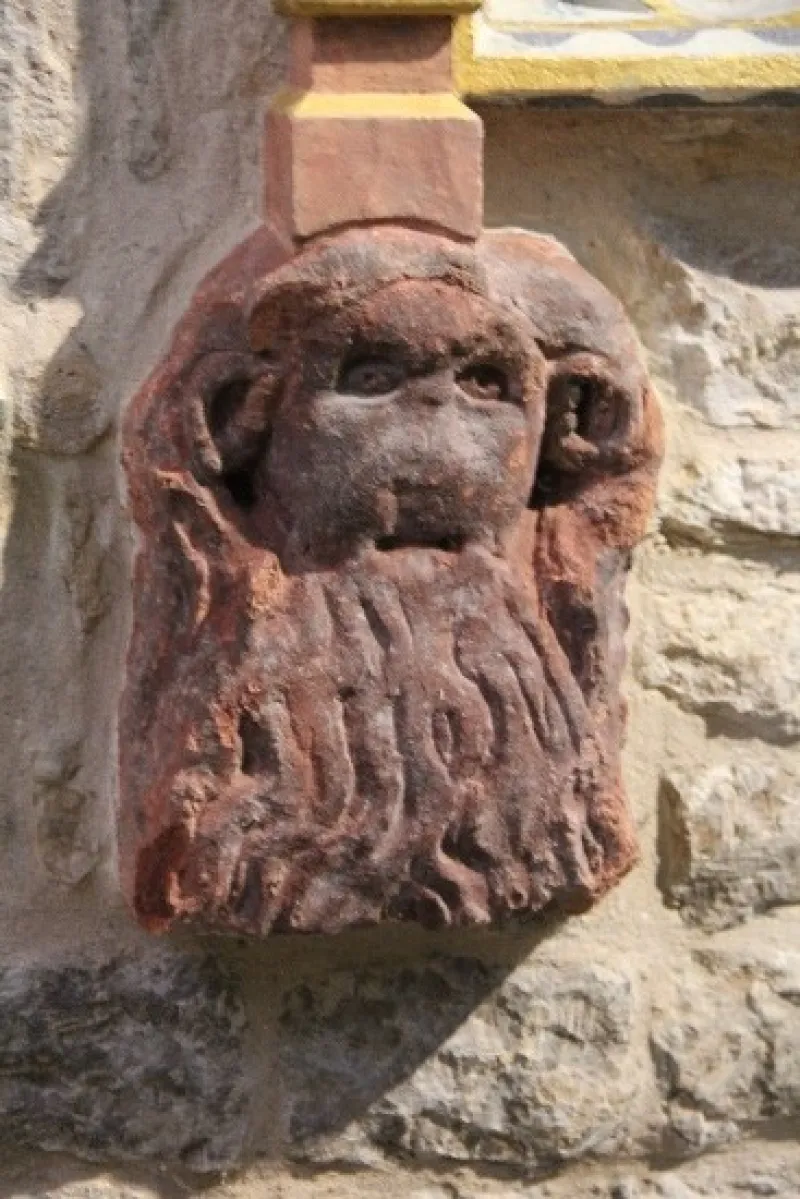
5. A pagan water spirit, dowsed as having been carved 1900 years ago.
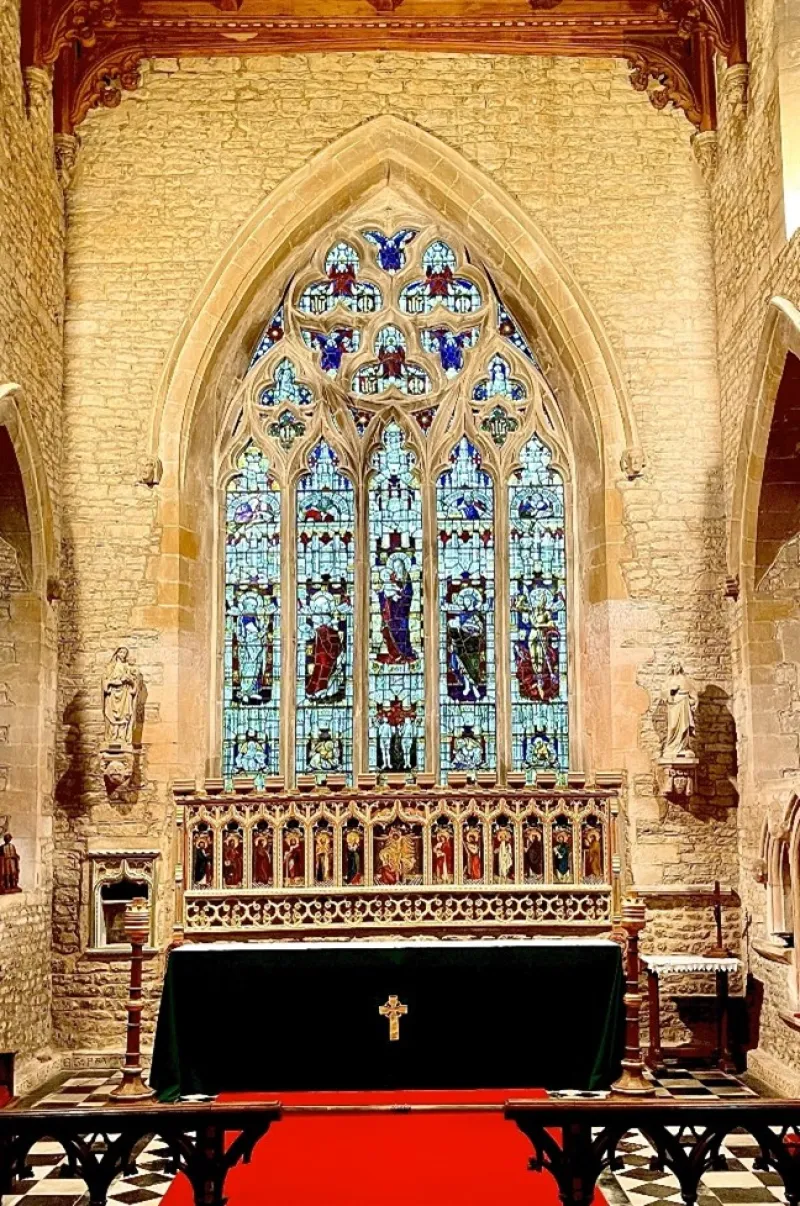
6. The current position of the altar.
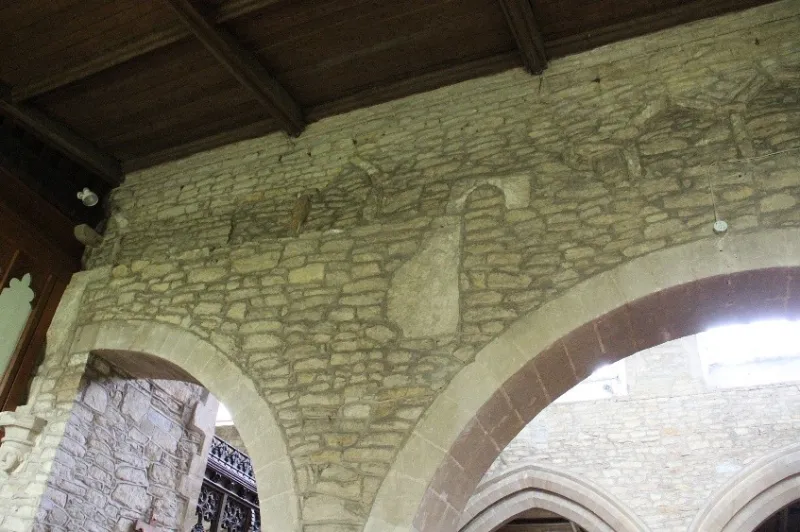
7. The Norman masons enlarged the church with a North aisle.
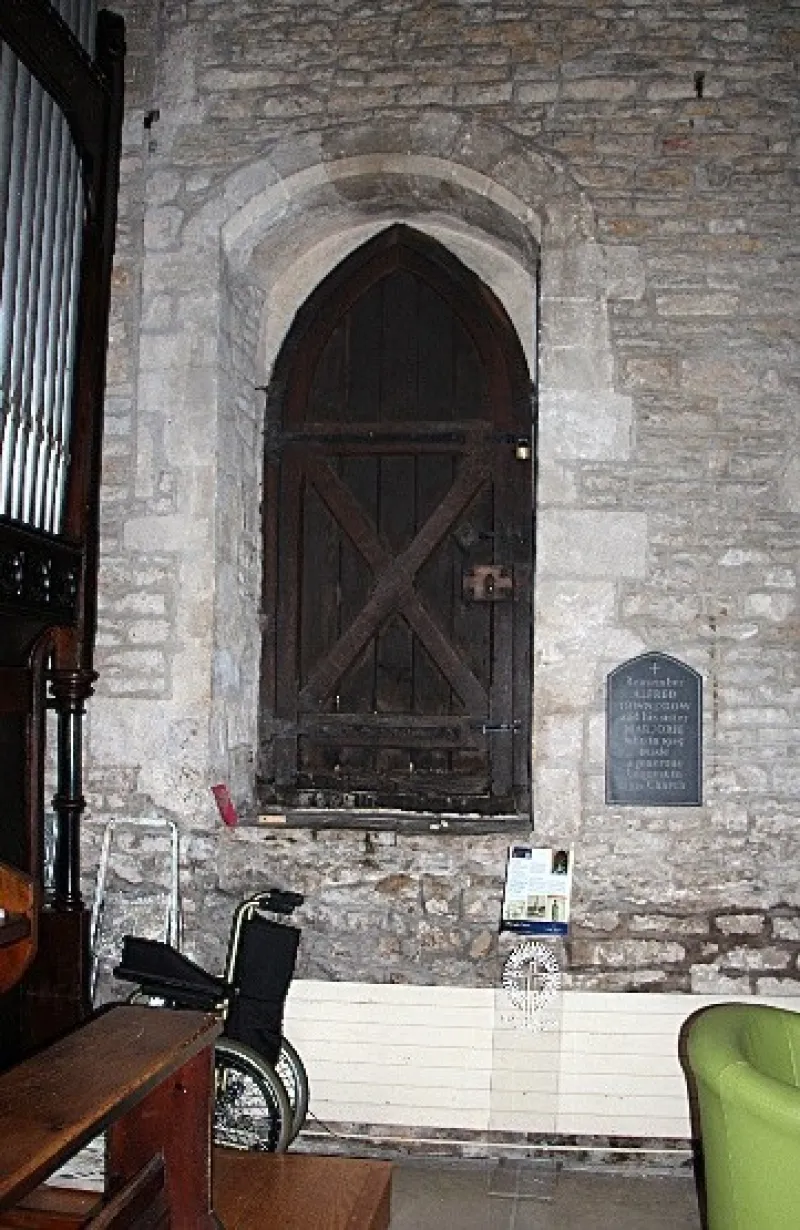
8. The King's door on the inside.
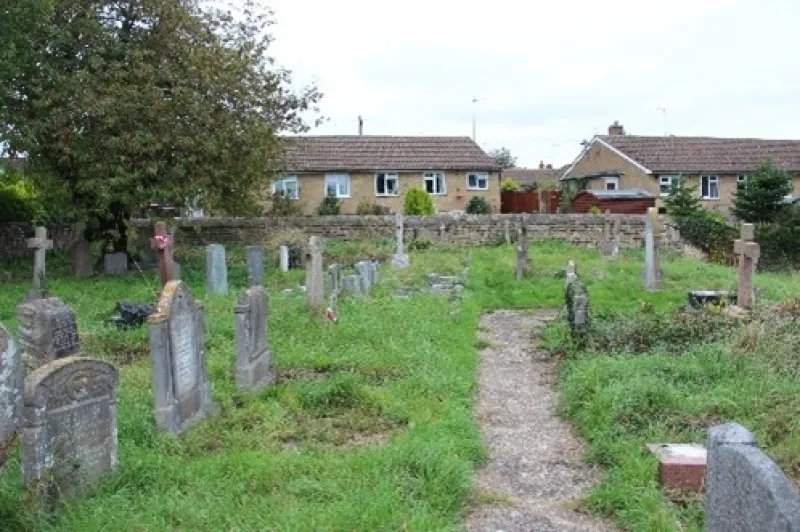
9. No trace of the royal palace now.
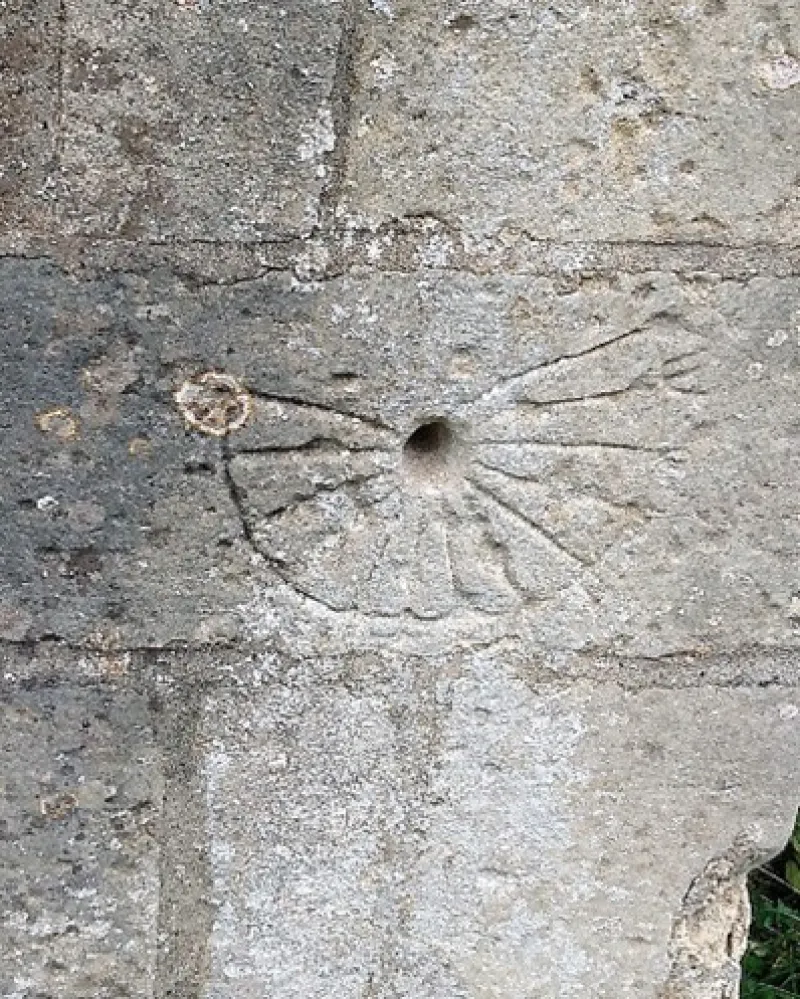
10. Saxon finger sundial.
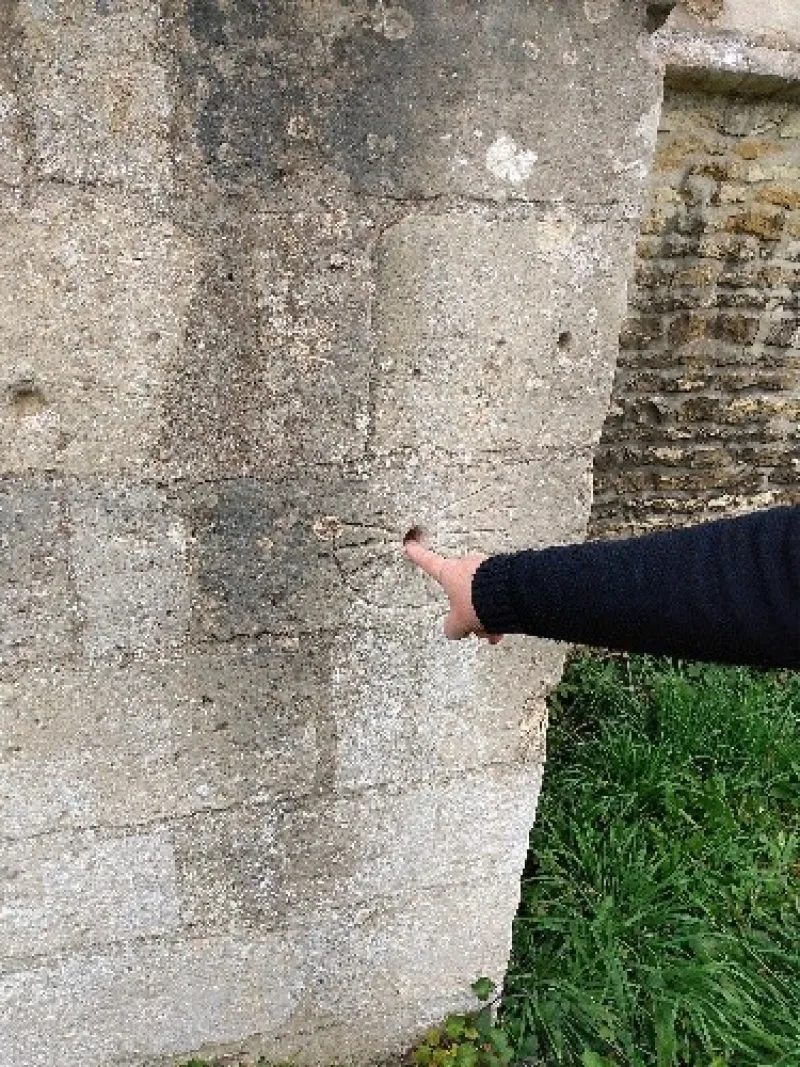
11. St Mary Magdalene Church has so many interesting features. The Saxon finger sun dial in the south buttress used by priests before clocks were invented, to determine the correct time to call people to Mass – but only on sunny days though!
It's been 9 years since I moved from Devon and my friend Brian came to visit last month. Deciding to show him something of Northamptonshire, we visited the picturesque village of Geddington with its magnificent Eleanor Cross in the village centre. Queen Eleanor died in 1290 at Harby, near Lincoln, and Edward 1 had a cross built at each of the 12 locations where her body laid overnight on the way to her funeral at Westminster Abbey.
This cross at 42 feet high is the only Royal monument in Britain to incorporate a Holy Well. Crossing the road to view an information board, we met Kam Caddell, a historian of immense knowledge we were later to find out, who was on the duty rota to show visitors around the church, but had wandered outside into the sunshine. He invited us in and gave us a wonderful running commentary on the history of this church with its Saxon origins. (St Mary Magdalene).
Kam also described the ‘King’s Door,’ located in the North wall, nowadays a metre off the ground, where a succession of Kings and Queens had processed down from the now long-lost Royal Palace of Geddington, located to the north of the church, to worship. He explained he’d love to do an archaeological dig for the Palace foundations because the geology of the area is all ironstone which makes it difficult to do magnetic/resistivity surveys.
On leaving Kam surprised me by giving me his card, which at the time I just stuffed in my pocket. But a few days later I read it, and my thoughts turned to that “lost Royal Palace” ……. and wouldn’t it be lovely to dowse for it! So, on emailing him I asked if I could dowse for both the Palace, and inside the church discreetly if no one else was around? He agreed (saying he doesn’t particularly believe in dowsing!), but yes, he’d open up the church, and we met there a couple of weeks ago. (His website is: - www.kamtours.com)
Beforehand, I printed off a google map and remotely dowsed the main energy lines. As expected, there was a main line running down the centre of the church. (There always seems to be in most medieval churches). There was one crossing 2/3rds the way along that, and a very strong power point in the nave.
So, on the day we met at 2pm and went into the church first so we could lock up afterwards to dowse outside. I showed Kam my google plan and verified the main energy line. Then walking up the church the rods crossed pretty well where marked, whereupon Kam suddenly exclaimed “well that’s traditionally where villagers in the past said where Eleanor lay overnight!”
Then on asking for the power point the rods led me straight to a centrally placed small table in the central aisle. On moving aside this table and placing my pendulum over where it was it spun very strongly…..and I could feel a tingling down the back of my neck – telling me it was a very special place. Kam then told me he had studied many Saxon churches, like Geddington that had been enlarged by the Normans, and this was the place that he believed would have been the altar……and he would love to do a dig here but being a busy working church he’s not allowed to!
So, I asked the question – is this the Saxon Altar: ……. Yes….. and how old, how long have people been worshiping here? More than 1000 years…. Yes, more than 2000? ….Yes…..and the pendulum stopped at 2900 years ago, making this church clearly to be planted on a Pagan site. On asking if there was anything buried down there the answer was no to anything gold or silver…. but yes to some things of historical interest.
The church is documented as dating from the early 800s, but clearly this one (to me at least) was placed here because of the spring/well nearby plus was in line with Pope Gregory’s instructions in 597 for missionaries not to tear down pagan temples in Britain but wait till they fell into disuse and then build a church on the same site. (This is documented in his letter to Mellitus of 597 who was departing Rome to convert us pagan Anglo-Saxons!)
Kam, although not really believing in Dowsing was quite excited to get confirmation of the altar position and said an alternative to “digging down” would be access the underneath if the reported crypt reached that far. Apparently in the last century a boiler was installed in an underground room on the NE of the building accessed from outside…..and at the back of that is a now sealed up door leading to the crypt. So, with rods in hand, I started on the inside NE wall and asked to show me the line of any potential crypt, and happily it led me west then around a Norman pillar to the Saxon altar area. But we both agreed to access that and provide safety scaffolding to hold up the floor would be in the hundreds of thousands…and prohibitive. (But I’d love to go in and have a look!)
Norman engineering-masons enlarged the church with a North Aisle by cutting two large arches to the Saxon north wall – quite a feat to keep the Saxon top half in place whilst removing most of the bottom half. (See photo 6).
They also extended the church eastwards and built on a new chancel. The amazing 14th Century stone reredos was probably taken from one of the Palace’s royal chapels, but an obvious question is why it is mounted on what appears to be pagan faces? A pagan water spirit/god and an ancient site guardian. In medieval times only the holiest of holy artwork was normally allowed in the chancel behind the high altar.
With one hand on the Water god’s head and with pendulum in other I asked, ‘how old’ and ‘when was it carved’….and the answer was 1900 years ago!
The Royal Palace
In 1129 Henry 1st first built a Hunting Lodge in Geddington about 100m to the north of the church, mainly because he loved to hunt deer in nearby Rockingham Forest. But at some point, in the 12th century it was enlarged to be a Royal Palace, so big that it was able to convene Parliament at various times with anything from 400 to 700 royals and dignitaries who would be housed there for weeks at a time. National Archives first show Parliament being called there in 1177, and then again in 1188 on news that Jerusalem had fallen and there was a need to plan another crusade.
Richard 1 (Lionheart) hosted King William of Scotland there for Easter of 1194 and King John was a regular visitor drafting the Magna Carta there prior to it being signed (1215).
Following the rods on the processional route across the graveyard to the ‘Kings Door’ of the church is not too much of a problem – although being quite uneven across the individual graves and I had to give many apologies to the occupants when standing on them by mistake.
Eleanor of Castille, a Spanish Princess, married Edward when she was 13 and he was 15. She had her first baby that year (17 in all of which only 6 reached adulthood) and reportedly spoke 4 languages and ended up owning many properties in her own name. She travelled extensively with her husband, even going with him on the crusades in 1271. When Henry III died the following year, they returned to England. From records it is known that Edward 1 and Eleanor came to Geddington 14 times and that Edward summoned Parliament several times.
By 1374 the Palace was described as being in ruins. In 1907 when the graveyard needed extending on the north side it was recorded, they unearthed ‘several running feet of palace foundations 2’ 6” wide.’
Since the 14th century there have been many houses built on the Palace’s site and there is no trace of it now. So, without going into people’s gardens I confined my search only to the graveyard, setting a date in my mind of the year 1300, when it would have been at its largest.
No doubt there were many ancillary buildings to the main hall but roughly plotted on the google plan (Photo 4) is the corner of a large building (blue line) that I dowsed.
The Eleanor Cross.
Of the 12 crosses that Edward 1 had erected only 3 survived and this one is probably the best preserved. Kam was really interested in where the water came from to supply the spring, so we went to see if it rose vertically under the cross or from elsewhere. I did a couple of wide circuits around the cross and found it came in from the north and in the middle of the road it was about 3m deep. I couldn’t stay long in the road at any one time as it seemed it was primary school finishing time and there were lots of parents doing the school run!
The well, or spring, has two doors at the foot of the monument of which one is jammed and the other padlocked. However, Kam explained that a hundred years or so ago an apron was built in front of the doors and the water was piped under the road to the river 100m away. The bottom of the ‘well’ is about 1m down from this spillway and if you reach your arm down you can touch the floor where the water rises up from.
All in all, I spent a fascinating 2 hours at Geddington and would recommend anyone passing to come and visit.
Richard Sears, October 2025.